
AI-Driven Ad Strategy Guide for High-Impact Results

Many digital marketers feel overwhelmed when trying to keep up with rapid market changes and increasing competition. Simplifying ad optimization no longer means sacrificing results, especially with AI-driven advertising solutions now offering personalized strategies and real-time insights. This guide reveals practical steps for small and medium-sized businesses to identify clear goals, select intuitive AI tools, and translate market data into ads that connect with the right audience, all without technical complexity.
Table of Contents
- Step 1: Identify Goals And Align Brand Messaging
- Step 2: Select And Configure AI Ad Generation Tools
- Step 3: Leverage Trend Analysis For Creative Inspiration
- Step 4: Optimize Targeting And Placement Strategies
- Step 5: Validate Ad Effectiveness With Real-Time Metrics
Quick Summary
| Key Takeaway | Explanation |
|---|---|
| 1. Set precise marketing objectives | Define specific, measurable goals for your advertising to transform aspirations into concrete strategies. |
| 2. Choose compatible AI tools | Select AI ad generation platforms that fit your technology stack and enhance targeting and reporting capabilities. |
| 3. Conduct trend analysis regularly | Monitor emerging trends to inform creative strategies that resonate with your target audience effectively. |
| 4. Implement dynamic targeting strategies | Develop sophisticated audience profiles and adapt targeting in real-time for more personalized advertising. |
| 5. Utilize real-time performance metrics | Establish comprehensive dashboards to track campaign effectiveness and make adjustments based on immediate data insights. |
Step 1: Identify goals and align brand messaging
Successful AI-driven advertising starts with crystal-clear goal setting and precise brand messaging alignment. Your strategic roadmap will determine how effectively your digital ads convert potential customers.
Begin by conducting a comprehensive brand messaging audit that examines your current communication strategies. AI applications in advertising reveal that targeted personalization dramatically improves engagement. Key steps include:
- Define specific, measurable marketing objectives
- Analyze your brand's core values and unique value proposition
- Identify target audience demographics and psychographics
- Map out desired customer journey and conversion points
The most effective approach involves breaking down your goals into granular, actionable elements. For instance, instead of a vague goal like "increase sales," specify "increase online product sales by 22% within the next quarter by targeting millennials in urban markets."
Precise goal setting transforms abstract marketing aspirations into concrete, measurable strategies.
Carefully align your messaging across all advertising channels to ensure consistency. This means your visual design, copywriting, and overall tone must reflect a unified brand personality that resonates with your target audience.
Pro tip: Conduct quarterly reviews of your advertising goals and messaging to ensure continued relevance and alignment with evolving market dynamics.
Step 2: Select and configure AI ad generation tools
Choosing the right AI ad generation tools is crucial for creating high-impact digital marketing campaigns that deliver measurable results. Your selection will directly influence the effectiveness and efficiency of your advertising strategy.
AI tools for marketing applications require careful evaluation across multiple dimensions. When selecting your AI ad generation platform, consider these critical factors:
- Compatibility with existing marketing technology stack
- Advanced targeting and personalization capabilities
- Real-time performance analytics and reporting
- Machine learning adaptation and optimization features
- Ease of use and intuitive interface design
- Scalability for different campaign sizes
Start by conducting a comprehensive tool comparison matrix that ranks potential platforms against your specific business objectives. This systematic approach helps eliminate options that don't align with your strategic requirements.

Here's a quick comparison of AI ad generation tool evaluation criteria and their business outcomes:
| Criteria | Why It Matters | Impact on Campaign Results |
|---|---|---|
| Tech Stack Compatibility | Ensures seamless integration | Reduces setup time and errors |
| Targeting & Personalization | Enhances audience relevance | Drives higher engagement rates |
| Real-Time Analytics | Supports fast decision-making | Improves campaign agility |
| Machine Learning Optimization | Adapts to performance data | Boosts conversion rates over time |
| User Interface | Simplifies user workflows | Saves time for marketing teams |
| Scalability | Handles growth & peak loads | Supports large or complex campaigns |
The most effective AI ad tools seamlessly integrate advanced technology with user-friendly design.
Pay special attention to configuration settings that allow granular control over audience segmentation, creative variations, and performance tracking. Prioritize platforms offering robust customization options that enable precise targeting and messaging refinement.
Pro tip: Schedule monthly platform performance reviews to ensure your selected AI ad generation tool continues meeting evolving marketing performance standards.
Step 3: Leverage trend analysis for creative inspiration
Trend analysis represents a powerful approach to generating innovative advertising concepts that resonate with your target audience. By systematically examining current market dynamics, you can transform data insights into compelling creative strategies.
Generative AI impacts creative professionals by providing real-time trend detection and inspiration mechanisms. Effective trend analysis involves multiple strategic components:
- Monitor social media conversations and hashtag trends
- Analyze consumer sentiment across digital platforms
- Track emerging visual and messaging styles
- Investigate competitive advertising approaches
- Explore industry-specific content performance metrics
Begin by developing a comprehensive trend tracking dashboard that aggregates insights from multiple sources. This centralized approach enables quick identification of emerging patterns and potential creative opportunities.
Creative inspiration thrives at the intersection of data intelligence and imaginative thinking.
Utilize AI-powered tools that can quickly synthesize large volumes of market data, helping you understand nuanced consumer preferences and cultural shifts. Look for platforms that offer predictive trend visualization to anticipate future marketing directions.
Pro tip: Allocate dedicated time weekly to review trend analysis reports, transforming data insights into actionable creative strategies.
Step 4: Optimize targeting and placement strategies
Effective ad targeting transforms digital marketing from a scattershot approach to a precision-driven strategy. Your goal is to connect with the right audience at the most opportune moment across multiple platforms.
AI revolutionizes ad targeting and placement by leveraging advanced machine learning techniques. Developing a sophisticated targeting strategy requires careful consideration of multiple strategic elements:
- Create detailed audience persona profiles
- Segment audiences based on behavioral and demographic data
- Utilize cross-platform targeting capabilities
- Implement dynamic ad placement algorithms
- Continuously refine targeting parameters
Develop a multi-dimensional targeting framework that goes beyond basic demographic information. This approach allows you to create highly personalized ad experiences that speak directly to specific audience segments.
Precision targeting transforms advertising from interruption to meaningful conversation.
Focus on developing adaptive targeting models that can learn and adjust in real-time. This means implementing AI-powered tools that continuously analyze performance data and automatically optimize your ad placement and targeting strategies.
Pro tip: Conduct weekly performance audits to ensure your targeting strategies remain agile and responsive to changing market dynamics.
Step 5: Validate ad effectiveness with real-time metrics
Measuring advertising performance requires more than traditional analytics - it demands a sophisticated, AI-powered approach that provides instant insights into campaign impact. Your ability to interpret real-time data will directly influence marketing success.
AI enables intensive advertising effectiveness analysis through advanced data collection and interpretation techniques. Developing a robust validation strategy involves multiple critical components:
- Establish clear performance benchmarks
- Implement multi-dimensional tracking metrics
- Monitor engagement rates across platforms
- Track conversion funnel progression
- Analyze psychological and behavioral response signals
Develop a comprehensive performance dashboard that aggregates data from multiple sources, providing a holistic view of your advertising effectiveness. This approach transforms raw numbers into actionable strategic insights.
Real-time metrics transform advertising from guesswork to precision engineering.
Focus on dynamic performance indicators that go beyond traditional click-through rates. These advanced metrics should capture nuanced audience interactions, sentiment shifts, and long-term brand perception changes.
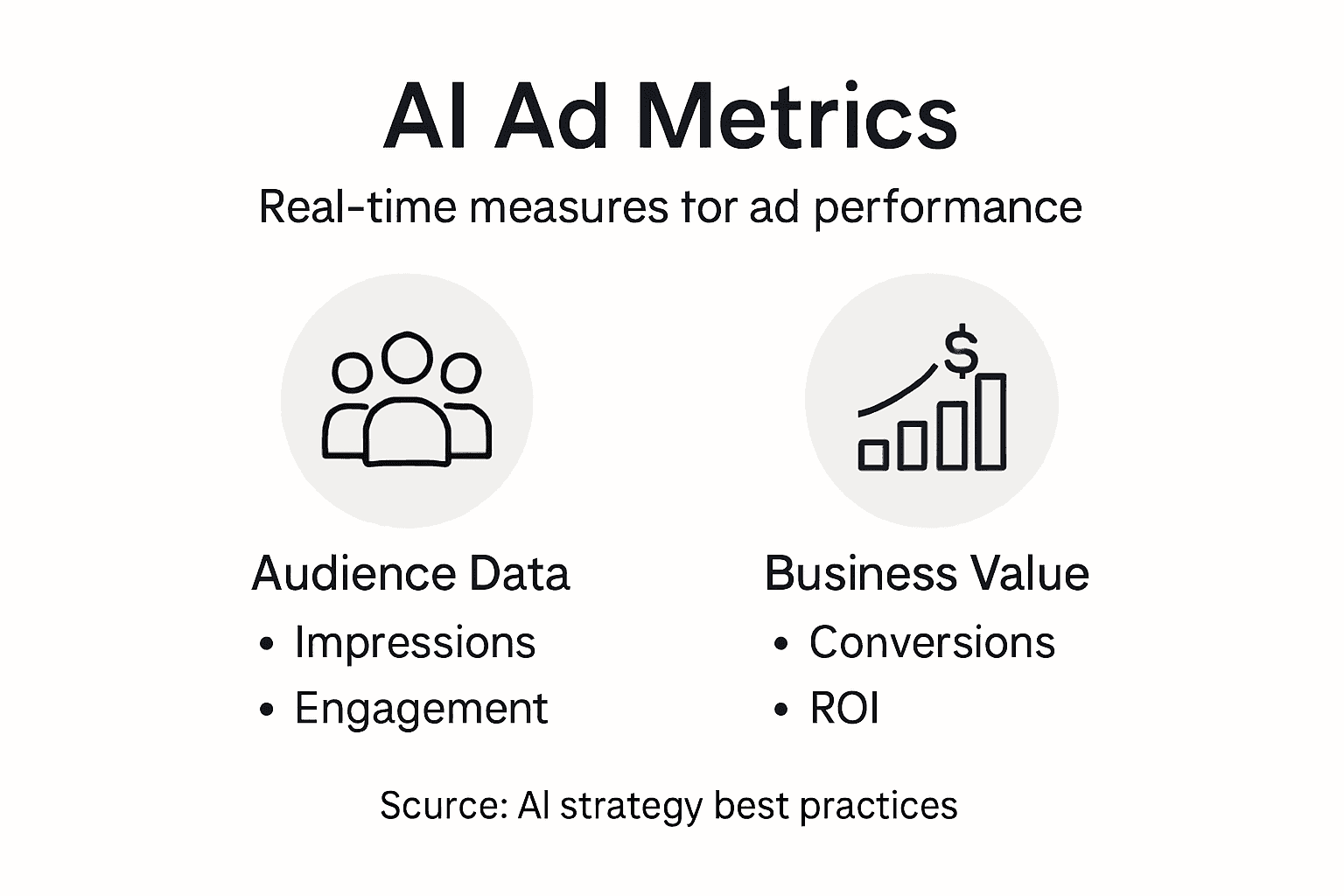
This summary table highlights the value of dynamic marketing metrics versus traditional measurements:
| Metric Type | Data Captured | Business Value |
|---|---|---|
| Traditional Metrics | Clicks, impressions | Basic performance overview |
| Dynamic Metrics | Behavioral signals, sentiment | Deeper insight, strategy refinement |
| Real-Time Metrics | Immediate conversion activity | Enables instant campaign adjustment |
Pro tip: Configure automatic alert systems that flag significant performance deviations, enabling immediate strategic adjustments.
Achieve High-Impact Advertising Results with Palmador.ai
If you are navigating the complex challenge of aligning brand messaging while optimizing AI-driven ad strategies you are not alone. Many marketers struggle to set clear goals, select the right AI tools, and leverage trend analysis effectively. This can lead to missed opportunities in targeting precision and real-time campaign optimization. Palmador.ai understands these pain points and offers a streamlined solution that automates your digital ad creation using advanced AI tailored to your brand identity and current market trends.
With Palmador.ai you can
- Quickly generate personalized ads that match your unique brand messaging
- Harness AI-driven trend analysis to stay ahead of market shifts
- Optimize targeting and placement with minimal effort
- Benefit from real-time performance insights without complex technical skills

Ready to transform your advertising strategy and maximize return on investment? Visit Palmador.ai today and discover how you can create impactful AI-powered ads that resonate deeply with your audience. Don’t wait to turn data-driven insights into winning campaigns start your journey now and stay ahead in the competitive digital market.
Frequently Asked Questions
How can I set clear goals for my AI-driven ad strategy?
To set clear goals for your AI-driven ad strategy, start by defining specific and measurable marketing objectives. Break these goals down into actionable elements, such as aiming to increase online product sales by 22% within the next quarter targeting millennials.
What factors should I consider when selecting AI ad generation tools?
When selecting AI ad generation tools, consider compatibility with your existing marketing technology, advanced targeting capabilities, and user-friendliness. Create a comparison matrix to evaluate potential platforms that align with your specific business objectives.
How can trend analysis enhance my AI-driven advertising campaigns?
Trend analysis can enhance your AI-driven advertising campaigns by providing insights into current market dynamics and consumer preferences. Regularly monitor social media trends and competitor approaches, then incorporate these insights into your creative strategy.
What are effective strategies for optimizing ad targeting and placement?
Effective strategies for optimizing ad targeting and placement include creating detailed audience personas and implementing dynamic placement algorithms. Regularly refine your targeting parameters based on audience behavior and engagement data.
How do I validate the effectiveness of my advertising campaigns?
Validate the effectiveness of your advertising campaigns by establishing clear performance benchmarks and monitoring real-time metrics such as engagement rates and conversion funnel progression. Create a comprehensive performance dashboard to synthesize data from various sources for actionable insights.
What should I focus on for my performance metrics in advertising?
Focus on dynamic performance indicators that capture behavioral signals and long-term brand perception changes, rather than just traditional metrics like click-through rates. Ensure these metrics provide deeper insights to refine your advertising strategy effectively.